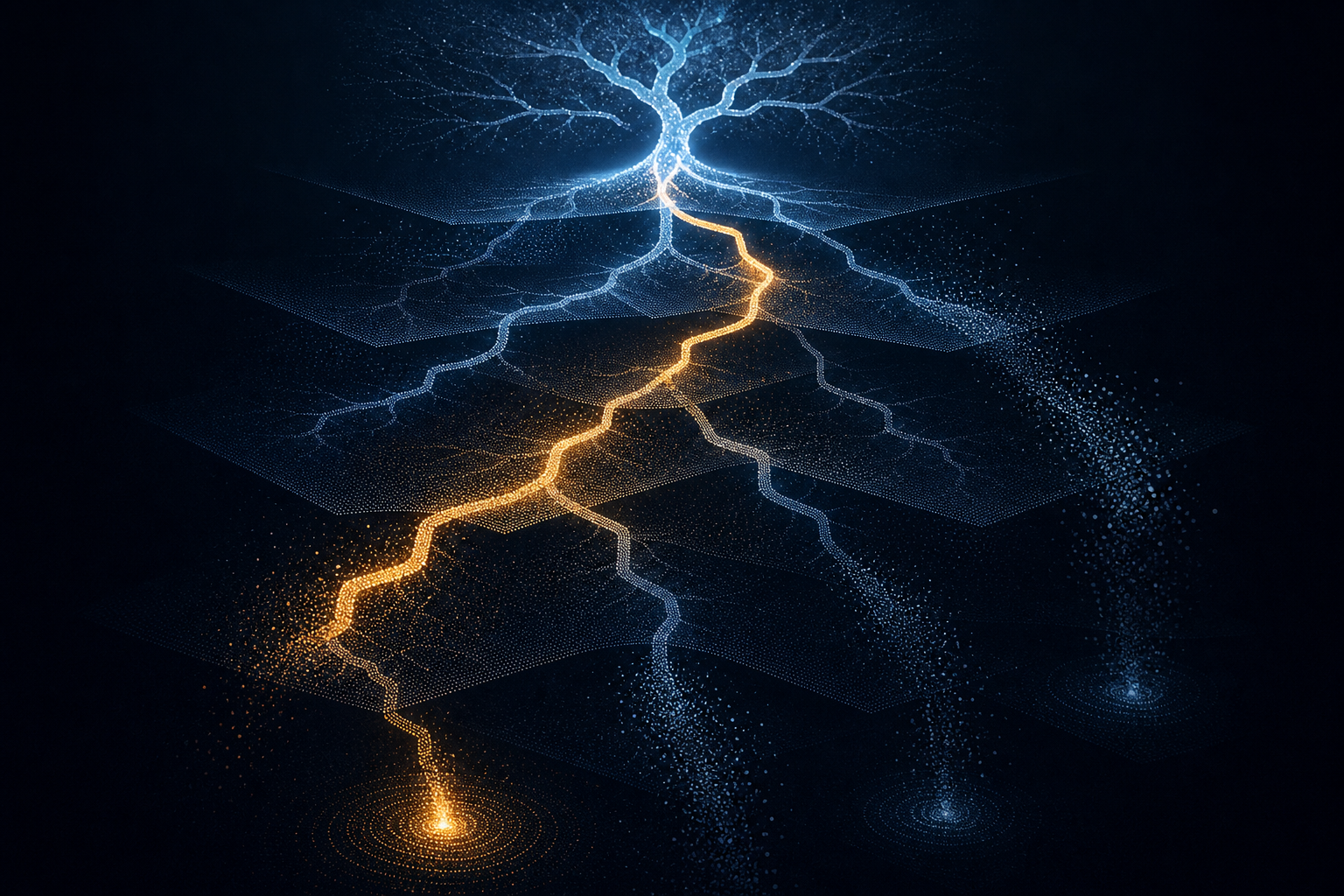
A citation share drop has four common causes: a model or retrieval refresh, competitor content displacing yours, index or crawl issues, and genuine content decay. Before you rewrite anything, run the citation share drop triage in order - verify the drop is real across a wide prompt panel, check the timing against engine refreshes, inspect who replaced you in the answers, then sweep for technical breaks. Most declines resolve to one of the first three causes, and each has a different fix.
First, Prove the Drop Is Real
Here is the honest truth most practitioners learn the expensive way: the majority of citation share panics begin with a sample that could never mean anything - ten prompts, run once, on a Tuesday. Someone checks, the brand shows up in six answers instead of nine, and suddenly there is a war room. Then someone reruns the same panel on Thursday and the number is back. Nothing changed except the dice.
That is not a flaw in your measurement so much as the nature of the thing being measured. LLM citations vary run to run: the same prompt asked twice, minutes apart, can return different sources with zero change on your end, because retrieval pipelines sample and rerank against a pool that rotates on its own. If your baseline is a single snapshot, you are reading tea leaves. Our citation share hub covers the definition and the math in depth; treat this post as its diagnostic companion, the thing you open when the number moves and you need to know why.
Sample size and prompt variance
The confidence check is quick. Widen the prompt panel until one flaky answer can't move the needle, rerun it across multiple days, and compare week-over-week averages instead of point-in-time readings. A real decline survives repetition. A phantom evaporates by the third run.
One engine or all of them?
Always measure at least two engines before declaring an emergency. A drop that shows up on ChatGPT and Perplexity at the same time means something happened to you. A drop on one engine while the other holds steady means something happened to that engine - which brings us to the next branch.
2+engines you should check before declaring a real dropDid a Model Refresh Change the Rules on You?
Model and retrieval refreshes are the weather of AI visibility. They arrive on someone else's schedule, they reshuffle sources across whole categories, and nothing you did caused them. The good news: they leave fingerprints everywhere.
The signature of a refresh
A refresh looks broad and sudden. Unrelated prompts shift at once, entire classes of sources gain or lose favor together, and the change lands in a day rather than eroding over weeks. If your ai visibility decline lines up with a known model version bump or a documented change to an engine's retrieval layer, the cause is almost certainly upstream - so check the release timing before you check your content. Leaderboards and engine trackers like The AI Rankings earn their keep here, because they show you when the ground moved under everyone at once.
Picture a brand whose citations vanish from a single engine overnight, while every competitor in the category shows the same cliff on the same date. That team is watching a refresh, and the right move is patience plus measurement: keep the panel running and see whether the next refresh restores you. Whatever you do, don't rewrite pages that were never the problem.
Cross-engine comparison as the tiebreaker
Different engines refresh on different schedules, and that asymmetry works in your favor. A drop on ChatGPT with stable Perplexity numbers points away from your content, because your content is identical in both places. Had your pages genuinely decayed, every engine reading them would have noticed. Only one did - the variable is the engine.
Is a Competitor Eating Your Citations?
Displacement has a distinctive shape, and it is worth learning to recognize on sight: your absolute mentions hold roughly steady while your ai share of voice shrinks, because the denominator grew. You didn't get worse. Someone else got cited more, and share is a zero-sum scoreboard.
Reading the replacement URLs
Pull the actual cited URLs for the prompts you lost. It is tedious work and absolutely worth it. You are hunting for repetition: one or two domains appearing again and again in the slots where you used to sit. Scattered, varied replacements suggest churn. The same competitor surfacing in eight of your ten lost prompts is a takeover - and now you know exactly whose pages to study. Fold that habit into standing competitor citation tracking, and pair it with share of voice measurement across your other channels, so you can see whether the displacement is AI-specific or part of a wider push.
New content vs refreshed content
Look at what the winning pages have in common. Content that takes citations from incumbents tends to share a profile: a direct answer sitting high on the page, a heading structure an engine can parse without effort, and a recent publish or update date. Sometimes the competitor shipped something new; just as often they refreshed a three-year-old page and the recency signal alone did the work. Either way, the replacement URLs tell you exactly what the engine now prefers - the most useful competitive intelligence you will ever get for free.
Index Churn, Crawl Issues, and the Boring Technical Causes
Nobody wants the answer to be a firewall rule. It lacks narrative. Yet the unglamorous culprits account for a surprising share of real, sustained losses: pages quietly dropped from indexes, robots directives or bot-protection rules blocking AI crawlers, redirects that broke the exact URLs engines were citing, a migration that deleted the paragraph an engine had been quoting for six months.
The five-minute crawler access check
Before any content strategy conversation, run the sweep. It takes five minutes, and it regularly ends investigations on the spot.
- Grep access logs for GPTBot, PerplexityBot, and other AI crawlers - confirm recent hits
- Check robots.txt and CDN or firewall rules for accidental blocks
- Confirm every previously cited URL still resolves with a 200
- Verify the quoted passages still exist on those pages verbatim
- Review recent redirects and migrations touching cited paths
If a crawler stopped visiting three weeks before your drop, you have your answer - and it is a fix measured in days, rather than a rewrite measured in quarters.
Churn vs loss: the cluster test
Retrieval systems rotate sources even when nothing changed on your side. That is how retrieval-augmented generation works, and TechTarget's coverage of RAG is a solid primer on the mechanics if you want to see why the same question can draw from a shifting pool of documents. The practical rule: one lost prompt is churn and deserves a shrug. A lost cluster - five related prompts in the same topic flipping together - is a signal and deserves the full triage.
How to Diagnose a Citation Share Drop Step by Step
Everything above collapses into a single decision path. Run the branches in order; each one either exits with a cause or hands you cleanly to the next test. The ordering exists for protection - it stops a team from spending a week rewriting pages when the real problem was a bot rule someone shipped on a Friday.
The six-branch triage tree
- Verify the measurement. Widen the panel, rerun across days, compare weekly averages. If the drop evaporates, exit here.
- Check refresh timing. Match the drop date against model releases and engine changes. Broad, sudden, single-engine shifts exit here.
- Compare engines. A drop everywhere implicates you; a drop in one place implicates the engine.
- Inspect replacement URLs. Repeated competitor domains mean displacement.
- Run the technical sweep. Crawler access, URL health, quoted passages.
- Only now treat it as content decay and queue the improvement work.
| Diagnosis | Telltale signature | Fastest confirming test | Time to diagnose | Response |
|---|---|---|---|---|
| Measurement noise | Drop vanishes on rerun | Rerun wider panel over several days | 2-3 days | None - tighten the panel |
| Model refresh | Broad, sudden, one engine, hits competitors too | Match drop date to release timelines | 1 hour | Monitor and wait |
| Competitor displacement | Mentions steady, share falling | Pull cited URLs, look for repeat domains | Half a day | Content counterpunch |
| Index or crawl break | Crawler hits stop, cited URLs error | Access logs plus URL health check | 30 minutes | Fix same day |
| Retrieval churn | Single scattered prompt losses | Cluster test on related prompts | 1 hour | Ignore, keep measuring |
| Content decay | Gradual multi-engine erosion | All other branches ruled out | After full tree | Refresh queue |
How long each branch takes
Look at the time column for a second. The scariest-sounding causes are the fastest to confirm - a refresh check takes an hour, the technical sweep takes thirty minutes - while the only diagnosis that demands sustained work is the one you reach last, by elimination. This is exactly the kind of check that rewards automation. AstroFabric's AI visibility agent runs this style of triage on a schedule, computing citation share exactly in a code sandbox rather than estimating it, so the number that triggers your alert is reproducible math instead of a vibe.
You Found the Cause. Now What?
Diagnosis is this post's whole job, but it would be unkind to leave you at the fork without signposts.
Matching response to cause
Refreshes get monitored, because the next refresh often gives back what the last one took. Competitor displacement gets a content counterpunch: study the replacement URLs, then work through the eight levers for improving citation share, which picks up exactly where this post ends. Technical breaks get fixed the same day you find them - no exceptions. Genuine content decay goes into a prioritized refresh queue. And underneath all four, the strongest position is a standing AI visibility audit rather than crisis-mode archaeology: the team that measured last month diagnoses in an hour, while everyone else starts from zero and argues about baselines.
Recovery timelines by cause
Be direct with stakeholders here, because expectations set now save arguments later. A blocked crawler can recover within days of the fix: the engine revisits, the citations return. Displacement takes weeks of focused content work to reverse, because you are competing against a page an engine already trusts. Refresh-driven drops sometimes correct themselves with no action from you at all - which is precisely why you diagnose before you spend.
Build the Early Warning System
The deepest fix is making sure you never diagnose from a cold start again. AI citation tracking on a weekly cadence turns every future drop from a mystery into a line on a chart with an obvious inflection point - and an inflection point with a date is nine tenths of a diagnosis.
What a weekly panel should contain
Good monitoring is unglamorous and specific:
- A stable prompt panel, large enough that variance averages out
- Per-engine breakdowns, so the cross-engine tiebreaker is always ready
- Competitor domains tracked alongside your own, so displacement shows up as it happens
- Alerts that fire when a cluster of related prompts flips together
AstroFabric surfaces this through the console, Slack, and email, and every change it proposes to your site sits behind approval-gated writes, so nothing ships without a human sign-off. The mindset shift is the real prize: a drop diagnosed in an hour is a data point on a healthy chart. A drop diagnosed a month late is a quarter's worth of answers your competitor gave instead of you.
6triage branches between panic and a confirmed causeRun the Triage Automatically
If you would rather have the six-branch tree run itself, AstroFabric's AI visibility agent tracks your citation share on a schedule, computes it exactly in a code sandbox, and flags cluster-level flips the week they happen - through the console, Slack, or wherever your team lives. Start free at /signup and turn your next drop into an hour's work instead of a quarter's mystery.
Frequently asked questions
How do I know if a citation share drop is real or just measurement noise?
Widen the sample before you react. Run your prompt panel across at least two engines, repeat it over several days, and compare weekly averages instead of single snapshots. LLM answers vary run to run, so a dip in one small sample often disappears at scale. A real drop shows up consistently across repeated runs and clusters around related prompts.
Can a model update cause my AI citations to disappear overnight?
Yes, and it is one of the most common causes. Model and retrieval refreshes can reshuffle sources across entire categories at once. The signature is a broad, sudden shift on one engine while others stay stable, often hitting your competitors at the same time. Check the timing against known release dates before assuming your content failed.
How can I tell if a competitor took my citations?
Pull the actual cited URLs for the prompts you lost and look for repetition. Competitive displacement shows a distinct pattern: one or two domains appearing again and again where you used to sit, usually with recently published or refreshed pages. Your absolute mentions may hold steady while your share shrinks because someone else's grew.
What technical issues cause AI visibility decline?
The boring causes are frequent offenders: robots rules or firewalls blocking AI crawlers like GPTBot, previously cited pages that now redirect or 404, and content changes that removed the exact passages engines were quoting. A five-minute sweep of crawler access logs and cited URL health catches most of these, and fixes often recover citations within days.
How long does it take to recover from a citation share drop?
It depends entirely on the cause, which is why diagnosis comes first. A blocked crawler or broken URL can recover within days of the fix. Displacement by competitor content typically takes weeks of focused content work to reverse. Drops caused by a model refresh sometimes correct themselves on the next refresh with no action from you.
Sources
Every playbook on this blog ships as a runnable mission.
Open a workspace and the playbook library is waiting - describe the outcome and the agents carry it end to end, on your plan's monthly credits.